
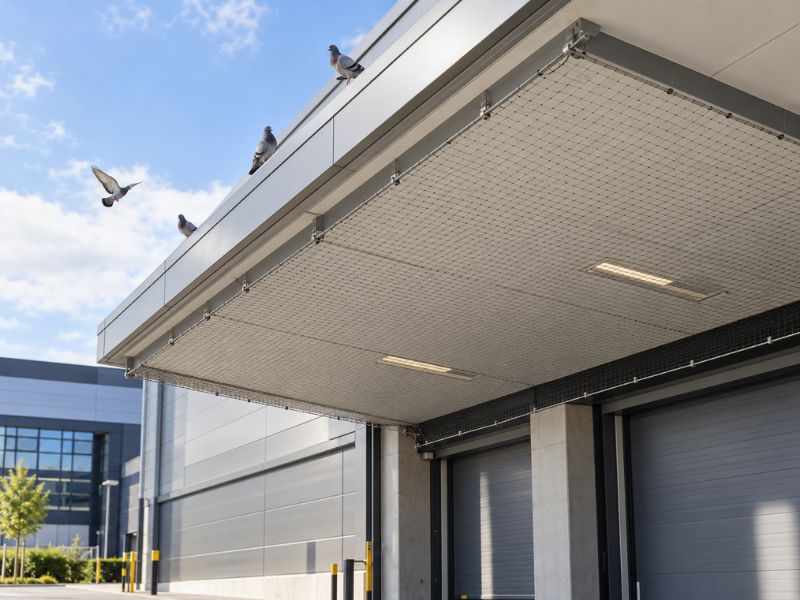
Bird activity can become a costly maintenance problem for commercial properties. Pigeons, gulls and other birds regularly use roof spaces, loading bays, canopies and structural ledges for shelter, often leaving facilities teams dealing with recurring fouling and damage. Professional Bird Netting Commercial Buildings solutions can help prevent access to these areas, protecting properties from ongoing hygiene concerns, additional maintenance and unnecessary disruption.
For facilities managers and commercial property owners, recognising the early warning signs can make a significant difference.
Quick answer: When should a commercial building have bird netting installed?
Commercial bird netting should be considered when birds repeatedly roost, nest or enter areas where they cause contamination, safety hazards or building maintenance problems. Correctly designed netting creates a physical barrier that prevents access without harming birds.
Here are seven signs that your property could benefit from professional bird netting.
1. Bird fouling keeps returning after cleaning
Are your maintenance teams repeatedly cleaning the same entrances, loading bays or external surfaces?
Removing bird droppings addresses the immediate contamination, but it does not prevent birds from returning.
Where birds have established regular roosting areas, fouling can quickly accumulate again.
Professional Bird Proofing tackles the underlying problem by preventing birds from accessing vulnerable parts of the building.
2. Birds are gathering beneath canopies and roof structures
Commercial buildings often contain sheltered areas that attract birds, particularly warehouses, industrial facilities and retail premises.
Common problem locations include:
- Loading bay canopies and exposed roof beams
- Plant rooms and roof voids
- Covered walkways and building entrances
- Multi-storey car parks
- Internal courtyards and sheltered service areas
These locations can provide ideal roosting opportunities while making cleaning and maintenance more difficult.
A correctly installed bird netting system closes off access while allowing the building to continue operating normally.
3. Bird activity is interfering with planned maintenance
Birds nesting or roosting around building services can create problems for contractors carrying out inspections, repairs and servicing.
Facilities teams may encounter contamination around ventilation equipment, drainage systems, rooftop plant and maintenance walkways.
Before installing netting, contractors should consider how engineers will access these areas in future.
Our Commercial Bird Netting Installation solutions can incorporate suitable maintenance access points, helping protect vulnerable spaces without unnecessarily restricting essential servicing.
4. Gutters and drainage systems are collecting nesting debris
Bird activity can affect more than the appearance of a building.
Feathers, nesting material and accumulated debris can obstruct drainage outlets and guttering. If left unresolved, these blockages may contribute to overflowing water, damp problems and additional maintenance costs.
Bird netting can help prevent access to suitable nesting locations around roof structures, reducing the opportunity for debris to accumulate.
However, existing drainage problems should also receive appropriate inspection and maintenance.
5. Bird activity is creating hygiene and safety concerns
Pigeon droppings and other bird fouling can contaminate working environments, create slippery surfaces and increase cleaning requirements.
These issues are particularly concerning around:
- Food manufacturing and storage facilities
- Hospitals and healthcare premises
- Schools and educational buildings
- Warehouses and distribution centres
- Public entrances and pedestrian routes
Businesses must manage workplace hygiene and safety risks appropriately.
Professional Bird Control Services can help facilities teams reduce recurring bird activity through targeted prevention and management.
6. Birds are moving from one problem area to another
Installing a deterrent in one location does not necessarily resolve bird activity across an entire property.
For example, birds prevented from landing on one ledge may simply move to nearby beams, roof structures or signage.
A wider building assessment can identify these alternative locations before work begins.
Some buildings benefit from combining netting with Bird Spiking to protect individual ledges and narrow surfaces.
For larger industrial estates and open commercial environments, Falconry Bird Control may provide an additional deterrent.
7. Reactive cleaning and repairs are becoming a recurring expense
Repeated bird-related cleaning, blocked drainage, damaged surfaces and additional contractor visits can place pressure on property maintenance budgets.
For multi-site facilities managers, these recurring issues can become particularly difficult to control.
Preventative bird netting offers an opportunity to address access points rather than continually paying to manage the consequences.
Although installation requires an initial investment, a professionally designed and maintained system can reduce future cleaning requirements and minimise disruption.
Why professional bird netting installation matters
Bird netting should never be treated as a simple matter of covering an opening.
Incorrect mesh selection, loose fixings or poorly maintained installations can leave gaps and potentially trap birds.
A professional assessment should establish:
- Which bird species are using the building
- Where birds enter, roost or nest
- Appropriate mesh size, fixings and system design
- Safe access for installation and future maintenance
- Inspection requirements and ongoing upkeep
Importantly, bird protection legislation must also be considered. Under the Wildlife and Countryside Act 1981, wild birds and nests in use or being built receive legal protection in England. Work must be planned accordingly, with suitable checks before installation.
Frequently asked questions
Is bird netting suitable for all commercial buildings?
Bird netting can protect many commercial and industrial structures, but suitability depends on the building design, target species and access requirements. A survey helps determine the most appropriate solution.
Does commercial bird netting need maintenance?
Yes. Facilities teams should arrange periodic inspections, particularly following severe weather, construction work or maintenance activities that may affect the system.
Can bird netting be installed on difficult-to-access buildings?
Yes. Depending on the structure, installations may involve specialist access equipment or trained rope access technicians to reach high-level and restricted locations.
Protect your commercial property with Pest Control 24 Seven
Persistent bird activity should not become an accepted part of commercial building maintenance.
Pest Control 24 Seven provides professional bird netting, bird proofing and wider bird management services tailored to commercial, industrial and public-sector properties.
Our team assesses the building, identifies vulnerable locations and recommends practical solutions that consider long-term protection, ongoing maintenance and operational requirements.
Contact our expert Operations Team to discuss your bird netting requirements, arrange a site assessment or request a quotation.