
Quick Answer
To introduce falconry bird control at a commercial property, start by identifying the problem bird species, recording where they gather and arranging a professional site assessment. A specialist falconer can then develop a suitable flying schedule, monitor bird activity and recommend additional preventative measures where necessary.
Pigeons, gulls and other nuisance birds can create ongoing problems for commercial properties, from contaminated loading bays and damaged buildings to hygiene concerns around food production facilities.
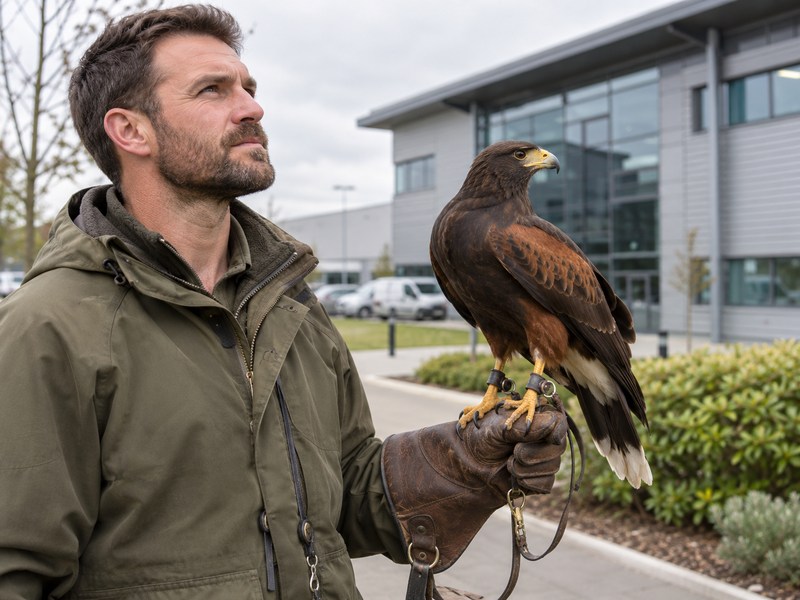
Falconry bird control offers a natural approach to managing these problems, using trained hawks and falcons to discourage birds from feeding, roosting and settling in unwanted areas. For facilities managers, industrial site operators and heritage property owners, understanding how to plan a successful falconry programme can help reduce persistent bird activity while supporting a wider pest management strategy.
1. What To Do First, Identify The Birds Causing Problems
Before arranging falconry bird control, establish which birds are visiting the site and what problems they are creating.
Common nuisance species include:
- Feral pigeons gathering around warehouses and roof structures
- Gulls feeding near waste facilities and industrial buildings
- Starlings congregating around commercial premises
- Other bird species roosting around large buildings and open spaces
- Different species behave differently, so accurate identification is important when developing an effective bird management strategy.
- Facilities managers should also record whether the birds are feeding, roosting, gathering temporarily or showing signs of nesting activity.
2. Identify Where Bird Activity Is Concentrated
Understanding where birds gather helps determine which areas require attention. Walk around safely accessible parts of the property and look for recurring activity around:
- Warehouse roofs and loading bays
- Waste storage and recycling areas
- Building ledges and elevated structures
- External plant and ventilation equipment
- Car parks and outdoor seating areas
- Open courtyards and industrial yards
Keep a record of when birds appear, how many are present and which locations they repeatedly visit. Photographs and site plans can help professional falconers assess the scale of the problem.
3. Reduce Food Sources And Other Attractants
Falconry bird control is often more effective when combined with measures that make a property less attractive to nuisance birds.
Where possible, businesses should:
- Keep external waste containers securely closed
- Remove food debris from outdoor areas
- Improve housekeeping around loading bays
- Prevent access to exposed food waste
- Repair damaged building openings where appropriate
- Discourage deliberate feeding of birds around the premises
For waste management facilities, food production sites and hospitality businesses, reducing available food sources can be particularly important. Removing attractants helps support the effectiveness of regular falconry patrols.
4. Arrange A Professional Falconry Bird Control Survey
A site survey allows experienced falconers to assess the property, identify the species involved and determine whether falconry is a suitable solution.
The assessment should consider:
- The size and layout of the site
- Bird numbers and behaviour
- Potential nesting locations
- Areas requiring protection
- Nearby public spaces and operational hazards
- Suitable locations for controlled flights
- Relevant wildlife protection requirements
The survey also helps identify whether additional measures, such as bird netting or bird spiking, may be beneficial. Pest Control 24 Seven offers professional Falconry Bird Control for commercial, industrial and heritage properties.
5. Develop A Suitable Falconry Programme
Once the site has been assessed, the falconer can recommend a programme tailored to the property’s needs. Falconry bird control involves flying trained birds of prey to create a natural predator presence. The aim is to make nuisance birds less comfortable feeding or settling in the area, encouraging them to move elsewhere.
The programme may include:
- Regular hawking sessions during periods of high activity
- Targeted flights around known problem areas
- Seasonal preventative visits
- Additional patrols when bird numbers increase
- Ongoing inspections and activity monitoring
The frequency of visits depends on the site, the species involved and the results achieved. Some locations may require frequent visits initially, while others benefit from a longer-term programme with periodic adjustments.
6. Coordinate Falconry Visits With Site Operations
For commercial and industrial premises, falconry activities must be planned around everyday operations. Site managers should discuss delivery schedules, vehicle movements, public access and other activities that could affect safe deployment.
For example, distribution centres may need falconry visits planned around busy loading periods, while stadiums and event venues may benefit from activity at suitable times before events. The falconer should assess operational risks, flight conditions, public safety and bird welfare before each deployment. Clear communication between site management and the falconry team helps ensure the programme operates safely.
7. Monitor results and review the programme
Effective bird management requires ongoing monitoring rather than relying on a single visit. Facilities managers should continue recording activity in previously affected areas and report changes to the falconry team.
Useful monitoring information includes:
- Changes in bird numbers
- Reduction in roosting or feeding activity
- New locations attracting nuisance birds
- Changes in contamination levels
- Renewed activity after periods without visits
- This information allows the falconer to adjust patrol schedules and recommend further preventative measures.
Falconry does not guarantee permanent exclusion, and birds may return between visits. Continued monitoring helps establish whether the programme is achieving its intended objectives.
Where Is Falconry Bird Control Most Suitable?
Falconry can be particularly useful for large or open commercial environments where installing physical bird deterrents across an entire site would be impractical.
Warehouses and distribution centres – Trained birds of prey can help discourage pigeons and other nuisance birds from gathering around roofs, loading yards and external storage areas.
Waste and recycling facilities – Regular falconry patrols can help manage birds attracted by accessible waste, particularly when combined with improved waste management procedures.
Stadiums and outdoor venues – Falconry can form part of a preventative programme for managing birds around seating areas, roofs, concourses and surrounding grounds.
Listed buildings and heritage estates – Falconry offers an alternative where installing netting or spikes would be visually intrusive or could affect historic building materials.
Industrial estates and manufacturing facilities – Large sites with multiple buildings and open areas may benefit from a coordinated falconry programme targeting recurring bird activity.
Should falconry be combined with bird proofing?- Falconry bird control and physical bird proofing can complement one another. Falconry aims to discourage birds from occupying a wider area, while physical exclusion measures prevent access to specific locations. For example, a warehouse might benefit from regular hawking sessions across its external grounds alongside Bird Netting installed around vulnerable loading canopies. Similarly, Bird Spiking may provide additional protection for individual ledges and building features. Combining methods can help businesses address both widespread bird activity and specific problem locations.
What should you know about wildlife legislation? – Wild birds and their active nests are protected under UK wildlife legislation. Falconry programmes must consider the species present, nesting activity and whether the proposed deterrence could interfere with protected birds or their nests. In England, the Wildlife and Countryside Act 1981 provides important protections. Certain activities may require authorisation or a wildlife licence. Professional falconers should assess these requirements before starting work, especially during breeding periods. For further guidance, consult Natural England’s information on wild bird protection and licensing. For heritage properties, Historic England’s guidance on bird deterrents also explains important considerations for protecting historic buildings.
Common Questions
-
How does falconry bird control work?Falconry bird control uses trained birds of prey to create a predator presence around a property. Nuisance birds may respond by avoiding the area, helping reduce feeding, roosting and other unwanted activity.
-
How often should falconry visits take place?Visit frequency depends on the property, bird numbers, species and level of activity. Some commercial sites benefit from frequent initial visits, followed by adjustments based on monitoring results.
-
Is falconry bird control suitable for listed buildings?Yes, where a suitable risk assessment supports its use. Falconry can provide a deterrent without fixing equipment directly to historic structures. Wildlife protections and site-specific conservation requirements must still be considered.
-
Does falconry bird control harm nuisance birds?The primary objective of deterrent falconry is to discourage nuisance birds through the presence of a trained predator rather than deliberately remove them. However, interactions between birds cannot be guaranteed to be entirely risk-free, so experienced handling, risk assessment and wildlife welfare are essential.
-
Can falconry prevent birds from returning permanently?Falconry can reduce bird activity, but results depend on site conditions and consistent management. Birds may return if attractive feeding or roosting opportunities remain available.
-
Is falconry suitable for year-round bird management?Falconry can form part of a year-round management programme, provided individual visits are appropriate for site conditions, bird welfare and applicable wildlife protections. Active nesting requires particular care.
Professional Falconry Bird Control with Pest Control 24 Seven
Persistent bird activity can create hygiene concerns, building maintenance problems and additional operational costs for commercial properties. Pest Control 24 Seven provides professional falconry bird control using experienced falconers and trained birds of prey. Our programmes are tailored to the individual property, taking into account nuisance bird behaviour, site conditions, operational requirements and longer-term preventative measures.
Whether you manage an industrial estate, warehouse, stadium or heritage property, our team can assess your requirements and recommend a suitable approach. Learn more about our Falconry Bird Control Services or contact our Operations Team to discuss your site.