
Quick Answer
To train hotel housekeeping staff in bed bug control, teach employees how to identify common warning signs, inspect accessible areas during room cleaning and report suspected activity immediately. Staff should understand how to avoid spreading bed bugs and when professional pest control assistance is required.
Hotel housekeeping teams play an important role in identifying the early warning signs of bed bugs. As staff regularly enter guest bedrooms, change bedding and clean furniture, they are often among the first people who could notice evidence of an infestation.
Effective bed bug control begins with early detection. Training housekeeping employees to recognise suspicious activity, understand where bed bugs hide and follow clear reporting procedures can help hotels respond before an infestation becomes more widespread.
For hotel managers and accommodation providers, incorporating bed bug awareness into routine housekeeping training is a practical way to support pest management, protect guest confidence and reduce unnecessary operational disruption.
1. What To Do First, Teach Staff How To Identify Bed Bugs
The first stage of bed bug control training is helping housekeeping teams understand what bed bugs look like and how to recognise evidence of their presence. Adult bed bugs are typically small, flat, oval-shaped insects with reddish-brown bodies. They are usually around 4–6 mm long, although their appearance changes after feeding.
Staff should learn to recognise:
- Live bed bugs: Small insects found around mattress seams, bed frames, headboards and furniture.
- Dark spotting: Small black or dark brown faecal marks, often concentrated around hiding places.
- Blood marks: Small reddish or rust-coloured stains that may appear on bedding or mattresses.
- Shed skins: Pale, translucent insect casings left behind as bed bugs develop.
- Eggs: Tiny, pale eggs that may be found in cracks, seams and concealed locations.
Photographs and practical identification materials can help employees distinguish these signs from ordinary dirt or other insects. It is important to explain that bites alone do not confirm a bed bug infestation. Different people react differently, and other conditions can produce similar skin irritation.
2. Show Housekeeping Teams Where To Look
Bed bugs typically hide in narrow cracks and crevices close to where people rest or sleep. Housekeeping employees should understand which accessible areas deserve particular attention during normal cleaning routines.
Common locations include:
- Mattress seams and piping
- Headboards and bed frames
- Bedside furniture and drawer joints
- Upholstered chairs and sofas
- Skirting boards and flooring edges
- Curtain folds and nearby fixtures
- Luggage racks and storage areas
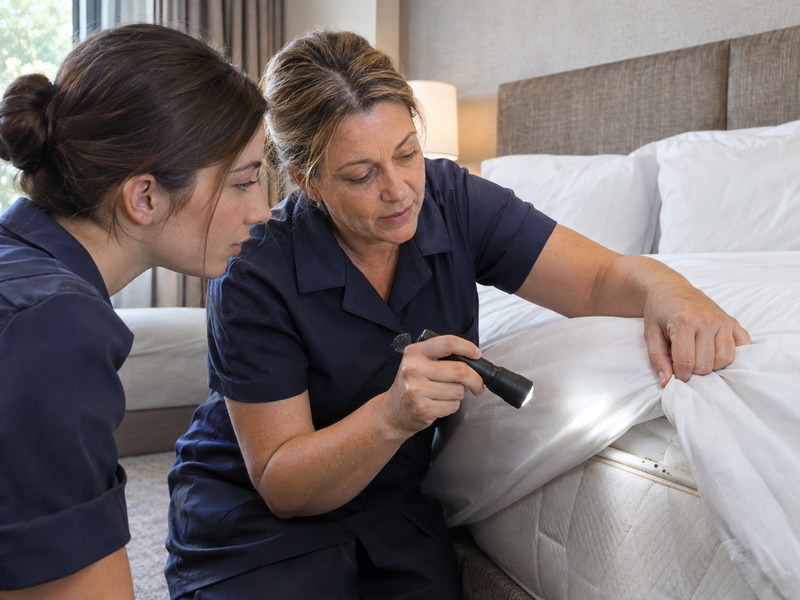
Training should demonstrate how to carry out simple visual checks without unnecessarily dismantling furniture or disturbing potential hiding places. The objective is not to turn housekeeping employees into pest control technicians. Instead, staff should develop the awareness needed to recognise unusual signs and report them promptly.
3. Include Bed Bug Checks In Routine Room Cleaning
Bed bug awareness should become part of everyday housekeeping procedures rather than an activity carried out only after a guest complaint. During room changeovers, staff can visually check accessible mattress seams, headboards and surrounding furniture while completing their normal duties. Supervisors should explain what to look for and ensure employees understand that a room can appear exceptionally clean while still containing bed bugs.
Bed bugs are not necessarily associated with poor housekeeping standards. They can be introduced through luggage, clothing and personal belongings, making hotels and other accommodation environments vulnerable regardless of cleanliness. Regular awareness checks contribute to hotel bed bug prevention by improving the likelihood that suspicious activity will be identified early.
4. Establish A Clear Reporting Procedure
Every hotel should have a straightforward procedure for reporting suspected bed bug activity. Employees must know exactly who to contact and what information to provide.
A useful incident report should include:
- Room number and location
- Date and time of discovery
- Description of the suspected evidence
- Photographs, where safely obtainable
- Details of any guest complaint
- Actions already taken
The housekeeping supervisor or designated manager should review the report promptly and arrange further investigation. Staff should not be expected to confirm an infestation themselves. Professional identification and inspection may be necessary. Clear reporting procedures help ensure concerns are not overlooked between shifts or departments.
5. Explain What Staff Should Avoid Doing
Before allowing new tenants, contractors, or agents to enter the property, landlords should confirm that professional death cleanup has removed all contamination.
Proper cleaning ensures:
- Biohazards no longer pose a risk
- Odours have been treated
- The property remains safe to occupy
Taking these steps protects future tenants and anyone entering the property.
6. Train Supervisors To Respond To Suspected Activity
Housekeeping supervisors have an additional responsibility to ensure concerns are escalated appropriately. When bed bug activity is suspected, managers should assess whether the room needs to be temporarily removed from service while an inspection is arranged. They should also coordinate communication with reception, maintenance and hotel management.
A professional pest control assessment may recommend checking neighbouring rooms, particularly where there is evidence that bed bugs could have spread beyond the original location. For more detailed guidance, read our article What Should Hotel Staff Do When a Guest Reports Bed Bugs?.
7. Provide Refresher Training And Maintain Records
Bed bug awareness should form part of staff induction, with periodic refresher sessions to reinforce good practice. This is particularly relevant for hotels employing temporary, seasonal or agency housekeeping staff.
Training can include:
- Photographic identification exercises
- Demonstrations of visual inspection techniques
- Examples of completed incident reports
- Guidance on handling potentially affected items
- Practical scenarios involving suspected bed bug activity
- Updates following previous pest control incidents
Managers should maintain records of completed training and ensure new employees understand the reporting process before working independently.
8. Why Housekeeping Training Matters For Bed Bug Control
Early detection can make a substantial difference to how a hotel manages suspected bed bug activity. A delayed response may allow an infestation to become more established, potentially affecting additional rooms and increasing treatment requirements.
Effective housekeeping awareness training can help hotels:
- Identify suspicious activity before guests report it
- Improve communication between housekeeping and management
- Reduce the risk of accidentally transferring bed bugs between rooms
- Support faster professional inspections
- Maintain accurate pest management records
- Reduce unnecessary room closures and associated disruption
- Strengthen wider hotel bed bug prevention procedures
However, staff training alone cannot guarantee that an infestation will be prevented. It should form part of a wider bed bug management programme that includes monitoring, professional inspections and appropriate treatment when required. Learn more about our Bed Bug Management Services.
9. When Should Hotels Arrange Professional Bed Bug Control?
If housekeeping employees identify suspected live bed bugs, eggs, shed skins or other convincing evidence, hotel management should arrange a professional assessment. Professional technicians can investigate suspected harbourage locations, confirm whether bed bugs are present and determine the appropriate treatment strategy.
Depending on the findings, professional bed bug control may involve heat treatment, targeted insecticide applications, monitoring and follow-up inspections. Hotels should follow any treatment-specific instructions concerning cleaning, laundry handling and returning affected rooms to service. Pest Control 24 Seven provides specialist Bed Bug Control Services for hotels and other commercial accommodation providers.
Common questions
-
How often should hotel housekeeping staff check for bed bugs?Staff should remain alert to possible evidence during routine room cleaning, particularly when changing bedding and inspecting accessible furniture. Hotels should also establish a more detailed inspection schedule based on their size, occupancy and pest management arrangements.
-
Can hotel housekeeping staff identify bed bugs without specialist training?Housekeeping teams can learn to recognise common warning signs through basic awareness training. However, confirming the presence and extent of an infestation may require professional pest control expertise.
-
Are bed bugs a sign of poor hotel hygiene?No. Bed bugs can be introduced into hotels through guest belongings and normal travel activity. Even well-maintained, regularly cleaned accommodation can experience infestations.
-
Should housekeeping staff remove mattresses if they discover bed bugs?Not without appropriate instruction. Moving potentially infested mattresses or furniture may spread bed bugs to other areas. Management should seek professional advice before arranging removal or disposal.
-
Can regular cleaning prevent bed bug infestations?Regular cleaning and visual inspections can help identify suspicious activity earlier, but cleaning alone cannot guarantee prevention. Bed bugs can remain concealed in small gaps and may require professional treatment.
-
What should staff do if they discover bed bugs after a room has been cleaned?They should report the evidence immediately, avoid further unnecessary disturbance and follow the hotel’s procedure for withdrawing a suspected room from service pending assessment.
-
Why is professional bed bug control important for hotels?Professional bed bug control provides the specialist inspection, treatment and monitoring needed to address confirmed infestations. It also helps hotels develop appropriate prevention and reporting procedures.
Professional Bed Bug Control for Hotels and Accommodation Providers
Training housekeeping staff to recognise bed bug activity is an important first step towards effective pest management. However, early detection must be supported by prompt reporting, professional investigation and suitable treatment where necessary.
Pest Control 24 Seven provides specialist bed bug control and extermination services for hotels, serviced apartments, student accommodation and other commercial premises.Our team can support businesses with professional inspections, treatment programmes, ongoing monitoring and practical preventative guidance. Whether you are responding to suspected bed bug activity or reviewing your existing pest management arrangements, our Operations Team can discuss your requirements.
Visit our Bed Bug Extermination page to learn more. Call our Operations Team: 0203 640 8247 Email: info@24sevengroup.co.uk